
Having worked in ceramic powder engineering for years, I increasingly feel that the granulation step, though seemingly inconspicuous, directly determines the success or failure of subsequent forming processes. With the same alumina or zirconia powder, differences in the sphericity, particle size distribution, flowability, and bulk density of the granulated particles can lead to significant disparities in the uniformity of pressed green bodies and the density of sintered products. The mainstream method for ceramic granulation is spray drying granulation.
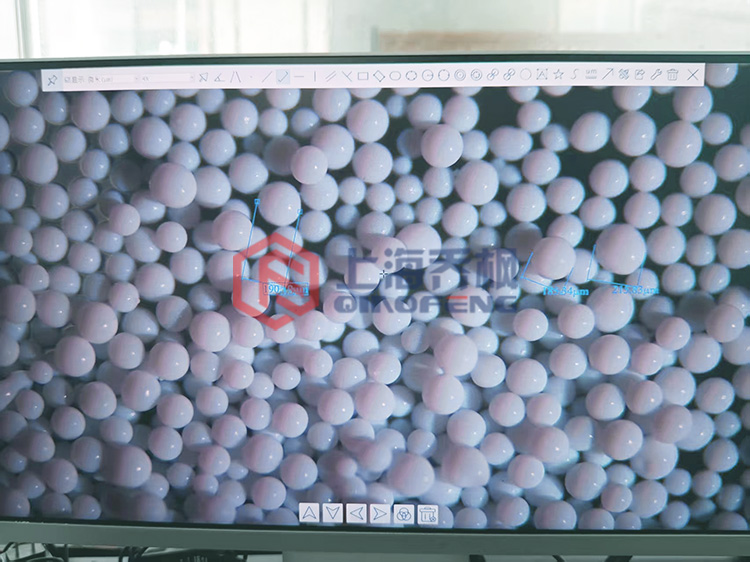
I. Working principle of the ceramic granulation spray dryer
In simple terms,ceramic granulation spray dryingis a process in which pre-prepared ceramic slurry is converted into countless tiny droplets through an atomization device, and then hot air rapidly removes the moisture from the droplets, causing the ceramic micropowder suspended in the droplets to agglomerate into spherical particles.
In actual operation, ceramic powder (such as alumina, zirconia, silicon nitride, silicon carbide, barium titanate, etc.) is first ball-milled with deionized water, dispersants, and binders (commonly PVA, PEG, etc.) into a uniform slurry. The slurry is then steadily fed into the atomizer via a diaphragm pump or screw pump.
There are two mainstream types of atomizers:
Centrifugal atomization: Relies on a high-speed rotating atomization disc (typically 8,000 to 20,000 rpm) to fling the slurry outward, forming fine droplets. Centrifugal atomization is more commonly used in ceramic granulation because it offers broader adaptability to slurry viscosity and solids content, with a relatively concentrated particle size distribution.
Ceramic granulation has several stringent requirements for particle quality: a narrow particle size distribution (e.g., a high proportion within the 40-250 micron range), good sphericity, sufficient particle strength so they do not crumble upon contact, but not so hard that they resist breaking during pressing; stable bulk density and flowability to ensure uniform filling in automatic presses.
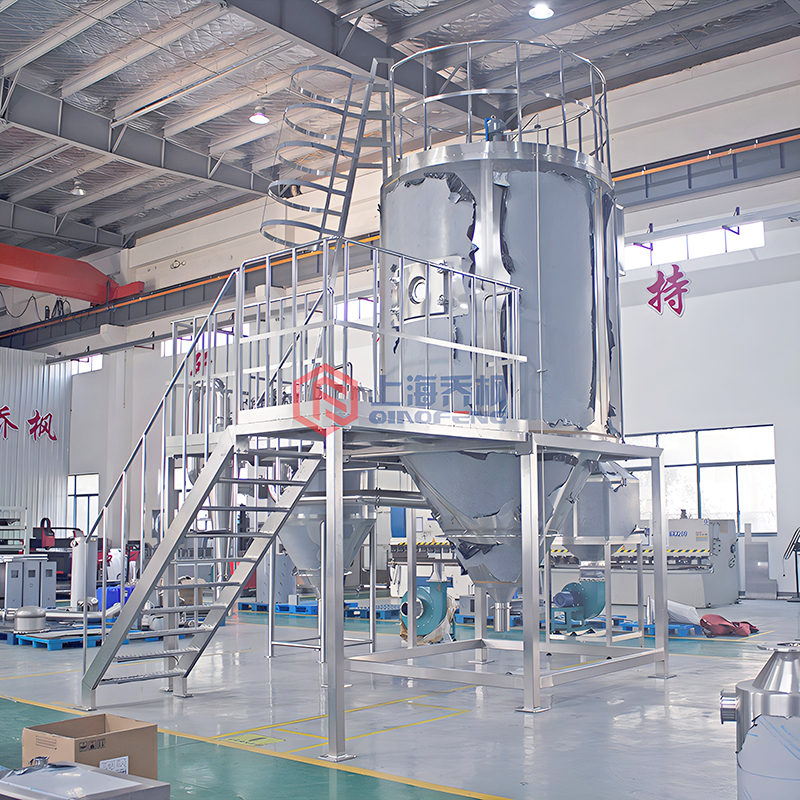
II. Key factors affecting ceramic granulation quality
No matter how good the equipment is, incorrect process parameters will not produce quality granules. Key insights from years of commissioning experience:
- Slurry solids content: The higher the solids content, the greater the particle strength, but atomization becomes more difficult, and large particles or nozzle clogging may occur. Generally, the solids content of ceramic slurry is controlled between 50% and 70%, depending on the powder particle size and binder system.
- Binder dosage: Excessive binder makes particles hard, but requires more thorough binder burnout after pressing; otherwise, sintering defects may occur. Insufficient binder results in weak particle strength, leading to breakage and fine powder generation during transport and filling.
- Atomization speed or pressure: Determines droplet size and particle size distribution. Higher speeds produce finer droplets and smaller particles; however, excessively high speeds generate excessive fine powder and reduce yield.
- Inlet and outlet air temperatures: For ceramic granulation, the inlet air temperature generally does not need to be very high, with 180-260°C being common, while the outlet air temperature is controlled at approximately 90-120°C to ensure moisture content meets specifications without deactivating the binder.
- Feed rate: If the feed rate is too fast, moisture cannot evaporate in time, and the tower wall is prone to caking; if too slow, production capacity suffers. The feed rate must be dynamically matched with hot air temperature and atomization conditions.
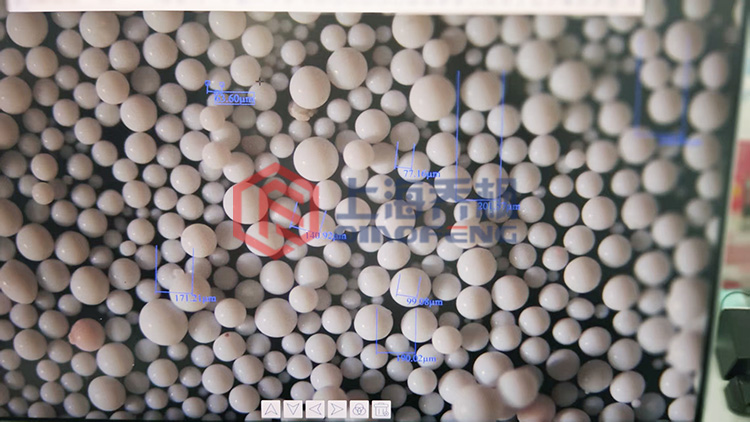
These parameters interact with one another, making sample testing and process development particularly important. Experienced equipment manufacturers will conduct small-scale trials based on your slurry characteristics, obtain data, and then scale up.
III. Notable brand models
In the niche field of ceramic granulation spray dryers, domestic equipment has advanced rapidly in recent years, with some manufacturers now able to provide stable and reliable complete systems. Based on my direct experience and industry exchanges, here are several brands worth including in your evaluation scope.
Shanghai Qiaofeng Industrial Co., Ltd.
Qiaofeng is mentioned first because they have many commendable aspects in the spray granulation product line, and their customer base is broad, spanning from laboratory R&D to large-scale production.
Founded in 2012, Qiaofeng specializes in the R&D and production of spray drying and granulation equipment. Their product sequence includes 35°C ultra-Low-Temperature Spray Dryer, closed-circuit spray dryers, low-temperature closed-circuit spray dryers,Spray Granulation Dryer, centrifugal spray dryers, ultrafine powder spray dryers, fluidized bed granulators, etc., with ceramic granulation being one of their important application directions.
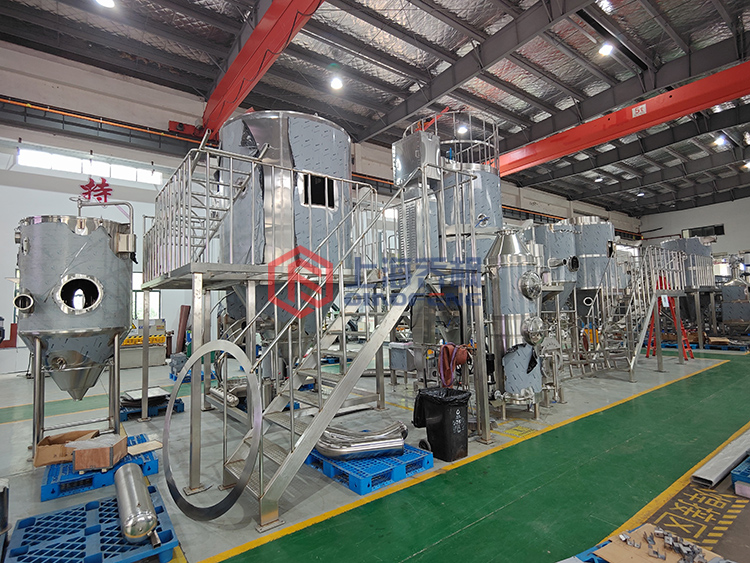
I noticed that their customer list includes major enterprises such as Chalco, CATL, and CNNC. Chalco's alumina powder engineering is deeply connected to ceramic materials; CATL uses ceramic powder or precursor granulation processes in lithium battery materials; and CNNC has demands in specialty ceramics as well. Being selected as an equipment supplier by these enterprises itself indicates that Qiaofeng has accumulated expertise in process control and equipment stability for powder granulation.
Several aspects of Qiaofeng's equipment left a strong impression on me: First, their atomization system can be flexibly configured between centrifugal and pressure types based on material characteristics, without pushing one type exclusively. Second, they offer corresponding models from laboratory-scale to pilot-scale to production-scale, allowing companies transitioning from R&D to mass production to continue using earlier process data with the same brand for scale-up, avoiding unnecessary detours. Third, their control system provides detailed recording, with parameters such as inlet air temperature, outlet air temperature, atomization speed, feed rate, and negative pressure inside the tower all traceable during the granulation process, which is highly beneficial for batch consistency management in ceramic granulation.
Frequently Asked Questions
1. What is the working principle of a ceramic granulation spray dryer?
The pre-prepared ceramic slurry is converted into fine droplets via an atomization device, and hot air is then used to rapidly remove moisture from the droplets, causing the suspended ceramic micropowder to agglomerate into spherical particles. The slurry is typically prepared by ball milling ceramic powder, deionized water, a dispersant, and a binder (e.g., PVA, PEG), and is subsequently fed by a pump into the atomizer to complete the granulation process.
2. What are the characteristics of a centrifugal atomizer? Is it suitable for ceramic granulation?
Centrifugal atomizers rely on a high-speed rotating atomizing disc (8000-20000 rpm) to fling the slurry outward and form droplets. They offer a wide adaptability range for slurry viscosity and solid content, with a relatively concentrated particle size distribution, making them the most widely used atomization method in ceramic granulation at present.
3. What are the hard indicators for particle quality in ceramic granulation?
The particle size distribution should be narrow (e.g., a high proportion within 40–250 μm), with good sphericity and adequate particle strength (particles should not crumble upon contact, yet should not be excessively hard to hinder compaction). Additionally, good flowability and appropriate apparent density must be ensured to guarantee uniformity in subsequent forming and densification during sintering.
4. Why does granulated particle quality affect the final performance of ceramic products?
Particle sphericity, particle size distribution, and flowability directly affect the uniformity of the green body during press forming. Poor particle quality may lead to uneven green body density, resulting in deformation, cracking, or insufficient densification after sintering, ultimately impacting the mechanical properties and consistency of ceramic products.
5. What aspects should be prioritized when selecting a ceramic granulation spray dryer?
Priority should be given to the atomizer type and stability, spray dryer tower design, precision of hot air temperature control, adjustability of particle size distribution, and the brand's practical case studies in the ceramic industry. Centrifugal atomizers demonstrate strong adaptability to ceramic slurries, and it is recommended to prioritize manufacturers with proven experience in granulation processes.
6. How should binders be selected during ceramic slurry preparation?
Common binders include PVA and PEG, among others. The selection should be determined based on the characteristics of the ceramic powder, the subsequent forming process, and the sintering schedule. PVA offers higher binding strength, while PEG is beneficial for improving particle flowability. The key is to ensure the slurry remains uniform and stable, avoiding agglomeration and sedimentation.
7. What range is the particle size distribution of granulated particles generally controlled within?
Ceramic granulation typically aims to concentrate the particle size within the 40–250 micron range, with a higher proportion being preferable, as this ensures both good flowability and uniform particle rearrangement during pressing, thereby reducing defects in the green body.