
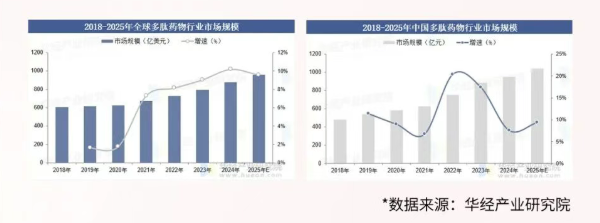
According to industry data, the global peptide drug market has exceeded USD 100 billion, with a domestic compound annual growth rate exceeding 15%. The demand for large-scale production of peptide APIs and formulations continues to
rise.
Behind the surging demand lie higher requirements for production efficiency, product activity, and cost control—how can scale, low cost, and regulatory compliance be achieved while preserving peptide activity?
This is the core challenge that all peptide pharmaceutical companies must overcome.
I. In-depth comparison of three drying processes: Why does oneLow-Temperature Spray Dryerstand out?
| Comparison dimension | (Shanghai Qiaofeng) Low-temperature spray drying technology | Traditional freeze drying technology | Traditional vacuum drying technology |
|---|---|---|---|
| Core characteristics | Drying at 35°C low temperature Material dried instantly in 1–2 seconds, continuous production |
Sub-zero freezing, vacuum sublimation drying
Drying cycle lasts several days, low production efficiency |
Inlet air temperature higher than the boiling point of the solvent used Material exposed to heat for a longer period |
| Activity and structure | Preserves peptide drug activity and structure | Good activity retention but cannot achieve continuous production | High temperature destroys peptide structure, leading to activity loss |
| Yield and cost | Powder recovery rate >98% Low material loss |
Low powder recovery rate, high batch material loss High energy consumption, unit production cost several times that of spray drying |
Low powder recovery rate, severe material loss
Relatively high energy consumption, persistently high production costs |
| Applicability and downstream processing | Directly replaces traditional freeze drying, enabling large-scale peptide production | Only suitable for small-batch production, cannot meet scale-up demands | Not suitable for heat-sensitive peptide materials, difficult to scale up |
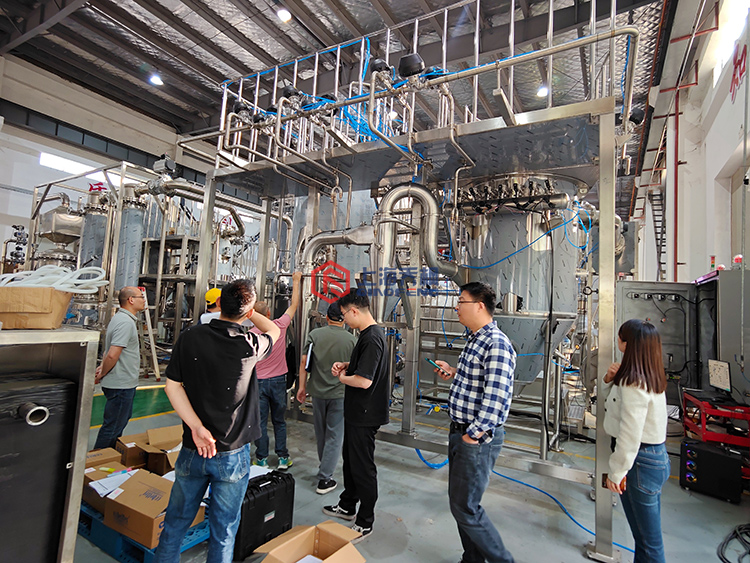
 II. Technical barriers addressed by Shanghai Qiaofeng's low-temperature closed-cycle spray dryer
Targeting the pain points of traditional processes, Shanghai Qiaofeng'slow-temperature closed-cycle spray dryerachieves efficient and compliant large-scale production through breakthroughs in the following four core technical barriers:
1. [Solving the activity loss pain point] 35°C low-temperature instantaneous drying
With inlet air at 35°C and outlet air at 25°C, the material is dried instantly in 1–2 seconds. Peptide activity and structural stability are preserved, matching the requirements of heat-sensitive materials and avoiding the activity damage caused by traditional high-temperature drying.
2. [Solving the scale-up pain point] Closed-cycle system with inert gas protection
Oxygen-free environment throughout the entire process, with dead-corner-free structural design;
Supports continuous production from pilot scale to industrial scale, easily achieving ton-level mass production to meet explosive market demand.
3. [Solving the recovery rate pain point] ≥98% high powder recovery rate for cost reduction and efficiency improvement
Dual optimization through system simulation calculations and process experience;
Powder recovery rate reaches above 98%, final moisture content stably maintained at ≤5%, significantly reducing material waste and lowering production costs.
4. [Solving the compliance pain point] GMP pharmaceutical-grade design with full-process validation
316L stainless steel material, electrolytic polished with no dead corners;
Full 3Q certification validation documentation, strictly compliant with GMP standards, helping pharmaceutical companies pass regulatory approvals quickly.
III. Shanghai Qiaofeng's technical strength validated by the market
Shanghai Qiaofeng's low-temperature spray drying equipment has been successfully applied in peptide projects at multiple well-known pharmaceutical companies, including Shenzhen Jianyuan (Jianxiang), Huahai Pharmaceutical (Saiao, Kesheng), Yangzhou Aurisco, Chongqing Xing Taihao, Amylin Pharma (Hanxin), Vazyme, Xiushi Pharmaceutical, Changfeng Pharmaceutical, and Qilu Pharmaceutical.
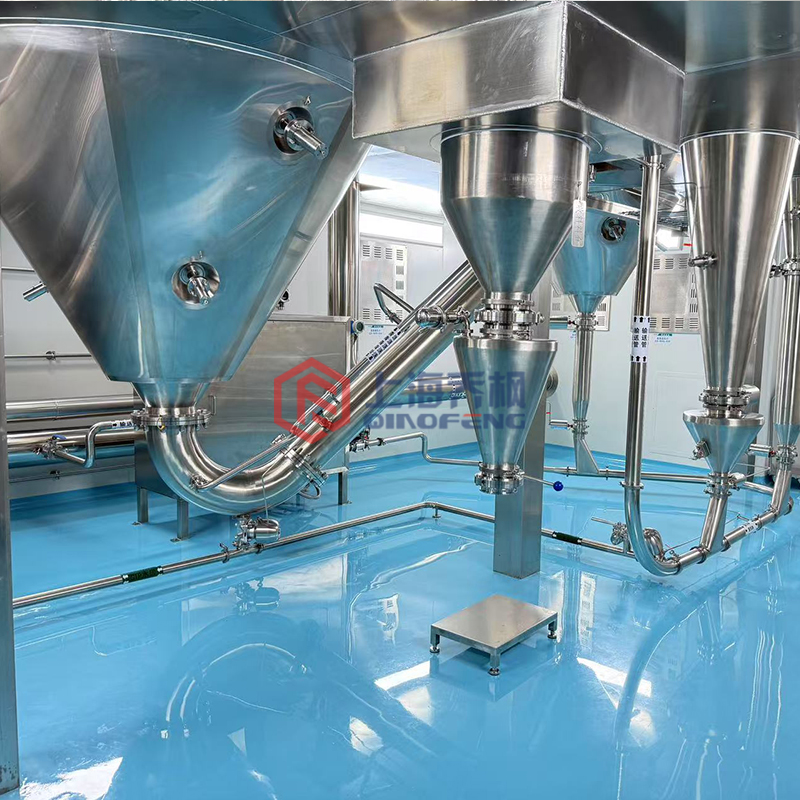
Validation results from actual projects with leading pharmaceutical clients:
- Some clients have cumulatively produced over 10 tons, purchased 9 systems in total, and have already advanced to Phase II projects;
- Multi-peptide activity retention rate exceeds 95%, recovery rate remains stable at 98%+, and final moisture content is as low as 4.2%;
- Production efficiency is more than 10 times higher than freeze-drying, energy consumption is reduced by 60%, achieving cost reduction and efficiency improvement.
IV. Closed Low-Temperature SystemSpray DryerAdditional Application Scenarios
This low-temperature drying equipment is applicable to the following peptide and biopharmaceutical scenarios:
- Peptide API drying, peptide formulation microsphere/particle preparation
- Low-temperature drying of heat-sensitive proteins, enzymes, and biological macromolecules
- Safe closed-loop drying of peptide materials in organic solvent systems
- Coverage from pilot scale → industrial continuous and compliant production
- Complete peptide drying lines for GMP workshops, aseptic facilities, and cleanroom areas
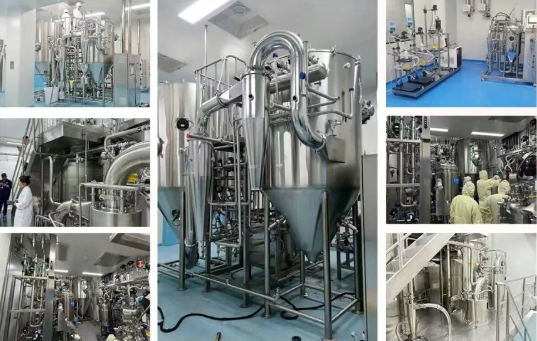
About Shanghai Qiaofeng Industrial Co., Ltd.
With a decade of unwavering dedication, Shanghai Qiaofeng has broken foreign technological monopolies in the field of low-temperature peptide drying, contributing to the high-quality development of China's biomedical industry. We provide one-stop solutions to facilitate the scale-up and commercialization of your peptide projects.
Frequently Asked Questions
1. How does 35°C low-temperature spray drying ensure that the activity and structure of peptide drugs are not compromised?
This technology dries at a low temperature of 35°C, with the material undergoing instantaneous drying within just 1-2 seconds of heat exposure, far shorter than the high-temperature, prolonged heating of traditional vacuum drying, effectively preserving the activity and spatial structure of peptide drugs and preventing heat-induced inactivation.
2. Compared with traditional freeze-drying, what advantages does low-temperature spray drying offer in terms of efficiency and cost?
Traditional freeze-drying cycles last several days and cannot support continuous production, with unit production costs several times higher than spray drying. Shanghai Qiaofeng low-temperature spray drying enables continuous production, achieving powder recovery rates >98%, low material loss, and significantly reduced overall costs, making it more suitable for large-scale peptide manufacturing.
3. What powder recovery rate can this equipment achieve? What impact does it have on actual yield?
The equipment's powder recovery rate exceeds 98%, with material loss significantly lower than that of traditional freeze-drying and vacuum drying. This maximizes the retention of active peptide ingredients, directly improving the yield of active pharmaceutical ingredients and reducing inter-batch losses.
4. Can this technology enable continuous, large-scale production of peptide drugs?
Yes. The material dries instantly within 1-2 seconds, supporting continuous feeding and discharge, which resolves the bottleneck of traditional freeze-drying that is limited to small-batch, batch-wise production. It can directly replace freeze-drying for large-scale manufacturing of peptide drug substances or formulations.
5. What advantages does a closed-loop spray drying system have over an open system?
The closed-loop system enables inert gas circulation of the drying medium, preventing material contact with the external environment and reducing the risk of oxidation and contamination. Combined with low-temperature drying at 35°C and instantaneous drying, it is particularly suitable for the industrial production of heat-sensitive, high-value-added peptide drugs.
6. Can this low-temperature spray drying equipment meet pharmaceutical compliance requirements?
The equipment is positioned as a drying solution for industrial-scale peptide drug production. Its closed-loop design, continuous process, and low material loss characteristics contribute to process stability, batch consistency, and cost control. It is compatible with GMP facilities and supports compliant scale-up manufacturing for pharmaceutical companies.