
In the field of spray drying, users working with aqueous-phase materials and those working with organic solvent materials have completely different concerns. Those working with aqueous materials care about wall adhesion, yield, and particle size distribution; users working with organic solvents often ask first, “Is it safe, and can the solvent be recovered?” This difference determinesClosed-Cycle Spray Dryerits special position in the entire drying equipment system—it is not used to “improve efficiency” but to “resolve risks.”
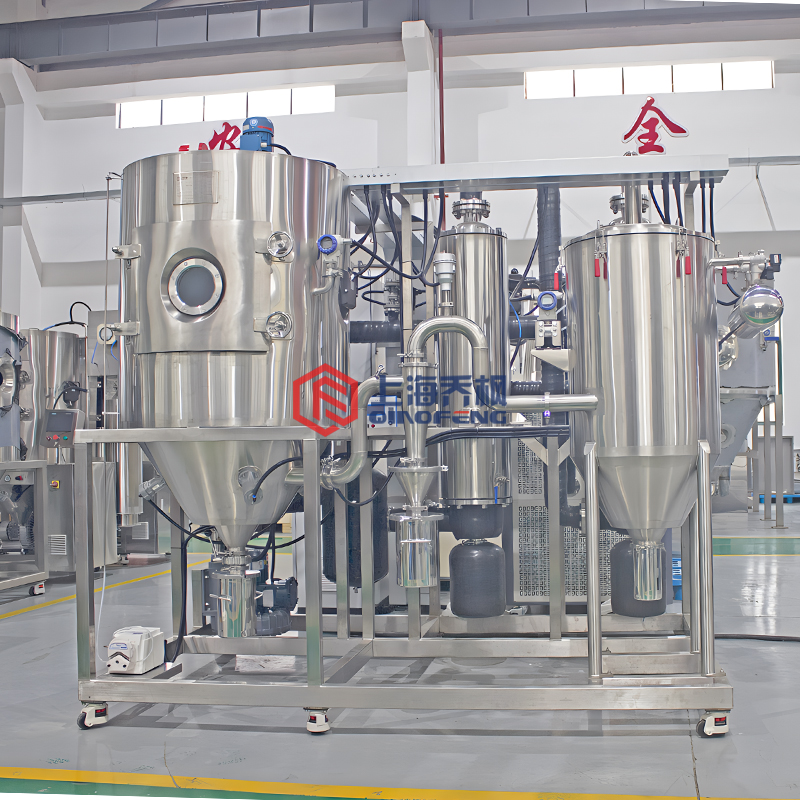
I. What Exactly Is a Closed-Cycle Spray Dryer
- Before understanding a closed-cycle spray dryer, consider a scenario: the solvent in the feed liquid of an intermediate plant is acetone. If a conventional open-type spray dryer is used, an explosion risk exists when the acetone vapor concentration in air falls within the range of 2.5%–12.8%. Open-type equipment continuously draws in fresh air, and organic solvent vapors are discharged with the exhaust gas, posing safety hazards while also causing solvent waste and environmental compliance issues.
- The core difference of a closed-cycle spray dryer lies in the fact that the entire drying system operates in a sealed environment, using an inert gas (typically nitrogen) to replace air as the drying medium. The evaporated organic solvent gas, driven by the fan, passes through a cyclone separator for dust removal before entering a condenser, where it is condensed into liquid and discharged for recovery. The non-condensable gas medium is continuously heated and recirculated within the system as the drying carrier.
- The value of this system can be summarized in three aspects: explosion prevention, oxidation prevention, and solvent recovery.
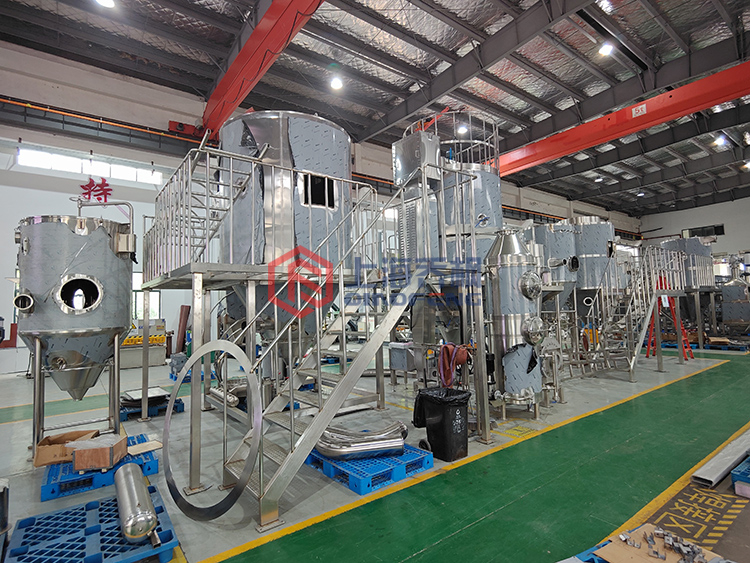
Closed-Cycle Spray Dryer
II. Shanghai Qiaofeng's Closed-Cycle Product Portfolio
Founded in 2012 and located in Fengxian District, Shanghai, Shanghai Qiaofeng is a comprehensive company integrating R&D, design, production, sales, and after-sales service of spray drying equipment. The company has deployed multiple product lines in the closed-cycle spray drying field, covering multiple levels from laboratory R&D to pilot-scale and production-scale systems.
1. QFN-BL-2 (Laboratory-Scale Closed-Cycle Spray Dryer)
This unit is specifically designed for organic solvents (such as alcohol, acetone, NMP, and DMF), using circulating nitrogen as an inert gas medium to replace air for spray drying. The equipment has an evaporation capacity of 3 kg/h (customization supported) and supports trial testing. Applicable products include non-oxidized ceramics, superhard alloys, high-performance battery materials, seasonings, health foods, pharmaceuticals, vitamins, organic drugs, synthetic resins, waxes, and more. The core design philosophy of this model is to address the characteristics of organic solvents with low flash points or slight toxicity, flammability, and explosiveness.
2. QFN-BL-D5 (Pilot/Production-Scale Closed-Cycle Spray Dryer)
This model is a closed-circuit organic solvent spray dryerfor new energy and new materials applications.The reference price is approximately RMB 258,000. It adopts Qiaofeng's innovative QFN-BLG-ES-VER2018-1A atomization system, with an NMP evaporation capacity of 0.8 kg/h. This model can be scaled up to production-grade, making it suitable for process scale-up requirements from small-scale to pilot-scale trials.
3. QFN-DWBL-1 (Low-Temperature Closed-Cycle Spray Dryer)
This is a closed-cycle drying unit integrating both high and low temperature capabilities, with a temperature range covering 35°C to 200°C. Water evaporation capacity is 2 kg/h, with a minimum sample feed volume of 50 ml. This model features a “triple-function” design—low-temperature drying at 35°C (suitable for heat-sensitive materials), high-temperature drying at 200°C (suitable for conventional materials), and closed-cycle organic solvent or oxidation-prevention drying. The drying chamber diameter is 400 mm, and the drying tower height is 500 mm. The electrical control system can be optionally equipped with a Siemens control module from Germany, with electrical components meeting Schneider standards. Solvent recovery rate is no less than 98%.
4. QFN-BL-3 (Closed-Cycle Low-Temperature Organic Solvent Spray Dryer)
This model is a dedicated closed-cycle low-temperature organic solvent unit, with overall dimensions controlled to less than 1.6 meters in length, width, and height. The heating system consists of a nitrogen-electric heating system, with temperature control accuracy within ±2°C and a maximum heater temperature of 110°C. The condensation system temperature can be controlled below 12°C, ensuring effective condensation and recovery of organic solvent vapors.
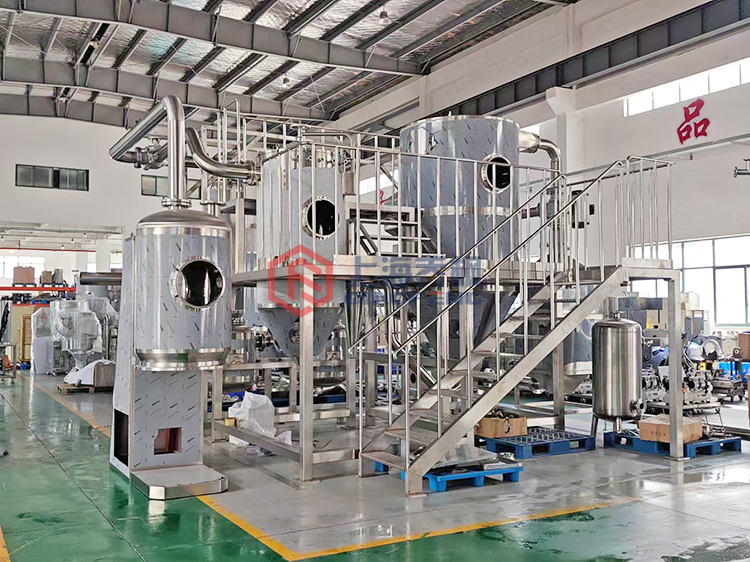
Closed-Cycle Spray Dryer
III. Explosion-Proof System: Four-Layer Protection Design
The most critical consideration for a closed-cycle spray dryer is safety. Shanghai Qiaofeng has designed a four-layer explosion-proof system for the equipment:
- Layer 1—Nitrogen explosion prevention: The entire pipeline uses nitrogen circulation, and the oxygen content within the system must be reduced to below 3% before normal operation. The inert nature of nitrogen fundamentally eliminates combustion conditions.
- Layer 2—Industrial control explosion prevention: When the system pressure exceeds 3000 Pa, the safety valve automatically opens to release pressure.
- Layer 3—Bursting disc explosion prevention: When abnormal pressure rise occurs inside the drying tower, the bursting disc at the tower top automatically opens to relieve explosion pressure.
- Layer 4—Whole-unit explosion prevention: An internal ventilation system (optional) is provided, suitable for handling hazardous gas environments.
The four-layer protection forms a complete safety closed loop from “prevention” to “control” to “relief.”
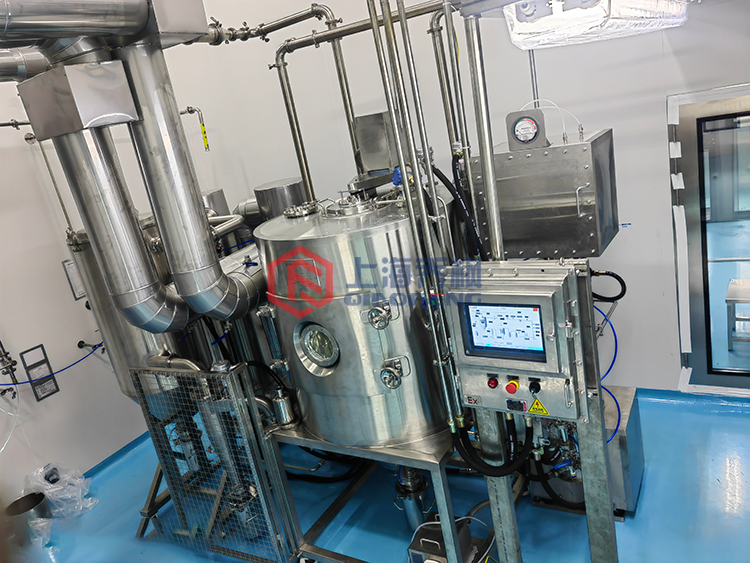
Closed-Cycle Spray Dryer
IV. Industry Applications and Customer Cases
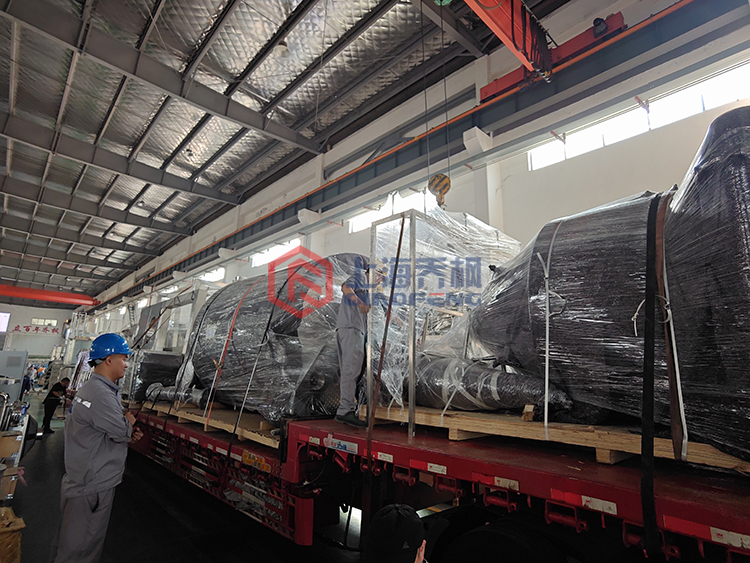
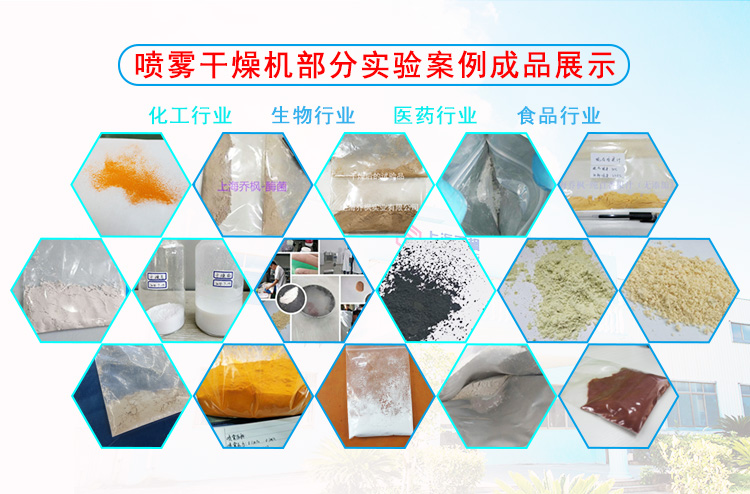
- The typical application scenarios of closed-cycle spray dryers are concentrated in three major categories: drying of materials containing organic solvents (such as alcohol, acetone, NMP, and DMF), easily oxidized materials (requiring drying in an inert environment), and toxic or high-value materials (requiring solvent recovery and emission prevention).
- Shanghai Qiaofeng has served approximately 2,000 customer organizations, including pharmaceutical companies such as WuXi AppTec, Qilu Pharmaceutical, Aurisco Pharmaceutical, Jianxiang Pharmaceutical, Huahai Pharmaceutical, and Nanjing Pharmaron, as well as cross-industry enterprises including CATL, Chinalco, China Banknote Printing and Minting, and CNNC. The company maintains research collaborations with Shanghai Jiao Tong University, Fudan University, Tsinghua University, and Shandong University.
- At the specific application level, closed-cycle spray drying systems are applied in scenarios including peptide drug drying, new energy material (such as battery material) preparation, and pharmaceutical intermediate drying. For materials containing organic solvents, the closed system enables solvent recovery and reuse, reducing material loss. According to relevant technical data, powder recovery rates can be consistently maintained above 98%.
Closed-Cycle Spray Dryer
V. Key Considerations for Closed-Cycle Spray Dryer Selection
When evaluating the selection of a closed-cycle spray dryer, the following dimensions deserve particular attention:
- Confirm whether the material characteristics necessitate a closed-cycle system. Materials containing organic solvents (ethanol, acetone, NMP, DMF, toluene, etc.), easily oxidized materials, toxic materials, or high-value materials typically require a closed system. If the material is aqueous-phase with no oxidation risk, an open-type unit is sufficient, and the additional investment cost of a closed system is unnecessary.
- Pay attention to the completeness of the safety system. The safety of closed-type equipment cannot be summarized by “nitrogen protection” alone. Specific configurations such as oxygen content monitoring and control logic, pressure relief devices, explosion-proof motors, and explosion-proof electrical controls must be examined.
- Evaluate solvent recovery efficiency. Solvent recovery rate is the core economic indicator of a closed system. The higher the recovery rate, the lower the operating cost and the smaller the environmental compliance pressure. The solvent recovery rate of Shanghai Qiaofeng's relevant models is rated at no less than 98%.
- Examine the equipment's air tightness and operational stability. Once a closed system leaks, the inert gas environment is compromised, and safety risks subsequently increase. The equipment's manufacturing process, seal component selection, and weld quality are all details requiring attention.
- Value trial testing and verification. The drying characteristics of different materials vary significantly, and the same equipment may perform completely differently when processing different materials. Shanghai Qiaofeng provides trial testing services, allowing users to verify equipment performance and material compatibility through actual material testing.
Frequently Asked Questions
1. What is a closed-cycle spray dryer? What are the main differences between it and a conventional open-type spray dryer?
The closed-loop spray dryer operates within a sealed system, utilizing an inert gas (typically nitrogen) as the drying medium in place of air. The primary distinction from open-type equipment lies in the fact that solvent vapors are condensed and recovered, after which the gas is recycled for reuse, and the system does not come into direct contact with ambient air. This enables explosion prevention, oxidation resistance, and solvent recovery.
2. What problems does a closed-cycle spray dryer primarily solve?
It primarily addresses the safety risks and solvent waste associated with the drying process of organic solvents. It prevents organic solvent vapors from mixing with air to reach the flammable or explosive range, avoids material oxidation, and recovers solvents, thereby reducing environmental emissions and solvent procurement costs.
3. Which materials require a closed-cycle spray dryer?
For feed liquids containing flammable and explosive organic solvents (such as acetone, ethanol, etc.), or materials sensitive to oxygen, closed-loop equipment is recommended. Aqueous-phase materials may also be used, but closed-loop systems offer more significant advantages in explosion prevention and solvent recovery for solvent-based systems. For aqueous phases, conventional open-type equipment may be considered to reduce costs.
4. How safe is a closed-cycle spray dryer? How is explosion prevention achieved?
The system operates in a sealed manner, replacing air with inert gases such as nitrogen to control the internal oxygen content below the lower explosive limit, thereby preventing the formation of explosive mixtures between organic solvent vapors and air. Meanwhile, solvent vapors are recovered through condensation, reducing exhaust emissions and the risk of combustion and explosion, making the safety far superior to that of open equipment.
5. What solvent recovery rate can a closed-cycle spray dryer achieve? Are operating costs high?
The solvent is condensed and recovered via the condenser. The specific recovery rate is influenced by factors such as the solvent's boiling point and condensation temperature. Typically, a high proportion of the solvent can be efficiently recovered, significantly reducing costs associated with solvent procurement and hazardous waste disposal. Nitrogen is recycled for reuse, resulting in low consumption. The operating costs are primarily reflected in the initial nitrogen charging and routine replenishment of losses.
6. Which brand of closed-cycle spray dryer is recommended? How is Shanghai Qiaofeng?
When selecting a brand, attention should be paid to equipment sealing, explosion-proof design, solvent recovery efficiency, and engineering experience. Shanghai Qiaofeng, established in 2012 and located in Fengxian District, Shanghai, offers a product matrix of closed-cycle spray dryers, focusing on addressing the risks associated with organic solvent drying, and can provide model selection and customization based on actual working conditions.
7. Can a closed-cycle spray dryer process aqueous-phase materials?
It can handle aqueous-phase materials, but the core advantage of the closed-loop system lies in explosion prevention and solvent recovery for organic solvents. If only aqueous solutions are to be dried, a conventional open-cycle spray dryer is generally more economical; however, if the aqueous-phase material is oxygen-sensitive or requires an inert atmosphere, a closed-loop system may be selected.