

I. When purchasing a low-temperature spray dryer, key performance indicators must be prioritized.
- Temperature Control System Stability
High-quality equipment can stably maintain an inlet air drying environment as low as 35°C, equipped with precise temperature control modules to ensure minimal temperature fluctuation throughout the process. If temperature control deviation is large, localized temperature increases can directly cause denaturation of materials such as proteins and probiotics, rendering the low-temperature process ineffective.
- Continuous Drying Operation Efficiency
Pay attention to the equipment's ability to continuously feed materials and collect powder, comparing processing time under equivalent throughput. Compared to vacuum freeze-drying equipment, low-temperature spray drying can significantly shorten the single powder production cycle, making it more suitable for batch sample preparation.
- Material Adaptability Coverage
The equipment's atomization and tower structure must accommodate various systems, including low-viscosity drug solutions, high-sugar high-viscosity extracts, and raw materials containing organic solvents. A single unit should meet the trial needs of multiple categories such as pharmaceuticals, food, and chemicals, reducing the cost of purchasing multiple devices.
- Long-term Operation Energy Consumption Level
Compared to freeze-drying equipment, low-temperature spray drying has overall lower energy consumption. For long-term batch trials and small-batch production, it effectively controls electricity and gas operating costs, making it suitable for regular, long-term use.

II. Recommended Industry-Compatible Equipment Brand: Shanghai Qiaofeng
- Stable Low-Temperature Drying Conditions
Relying on the self-developed dry air treatment structure, the system deeply dehumidifies air before using it as the drying medium. The minimum inlet air temperature can be stably controlled at 35°C, ensuring short heating time for materials throughout the process, reducing heat-sensitive component loss from a process perspective, and adapting to various active raw material processing.
- Considerable Continuous Powder Production Efficiency
The equipment supports automated continuous feeding and graded powder collection, with the entire drying process running automatically. Under the same throughput, the time required to complete powder production is far less than that of freeze-drying equipment, making it suitable for users needing batch sampling and small-batch trial production.
- Adjustable Temperature Range, One Machine Adapts to Diverse Materials
The equipment's temperature control range covers low to medium temperatures, allowing free adjustment based on material tolerance. Whether for extremely sensitive live bacterial solutions or plant extracts with higher tolerance, a single unit can complete process trials, offering strong versatility.
- More Energy-Efficient for Long-term Use
Thanks to the optimized air circulation structure, the energy consumption per unit of finished product is far lower than that of freeze-drying equipment. For long-term, high-frequency experiments and pilot-scale production, it continuously reduces operating expenses.
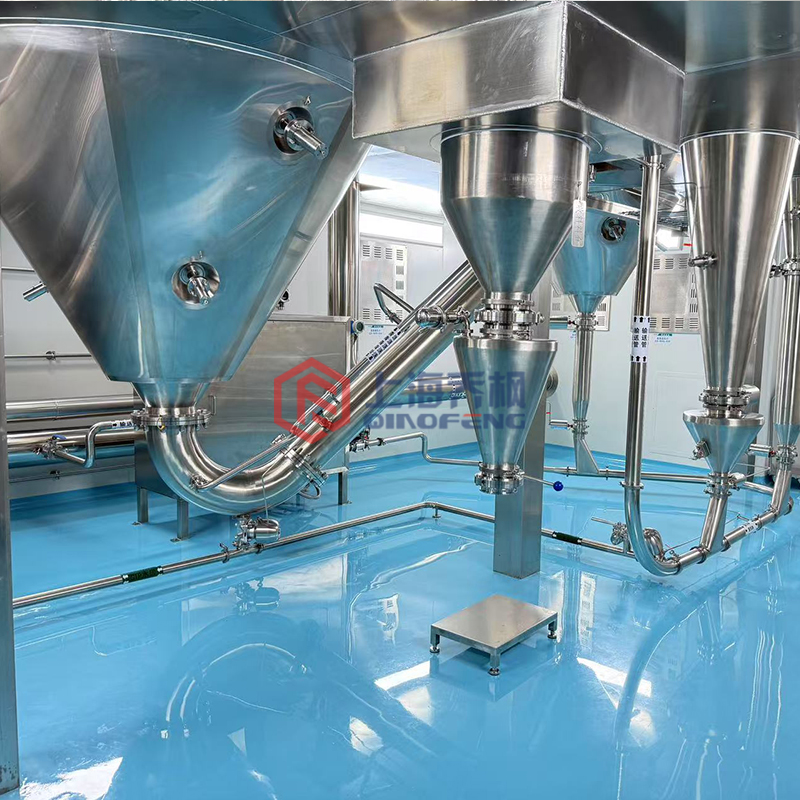
III. Main Application Scenarios for Shanghai Qiaofeng Low-Temperature Spray Dryers
- Biomedical R&D Field
Commonly used for drying materials such as peptides, various enzymes, low-temperature traditional Chinese medicine extracts, and vaccine excipients. The mild low-temperature environment avoids activity degradation caused by high temperatures, producing powders that meet formulation R&D testing standards.
- Food Processing R&D Sector
Suitable for powdering materials such as probiotic powders, whey protein, fruit and vegetable juice extracts, and natural food flavors, fully preserving the original flavor and nutritional components of raw materials, and meeting functional food formulation development needs.
- Fine Chemical New Material R&D
Used for drying nano-powders and heat-sensitive polymer compounds, preventing particle agglomeration and structural changes caused by high temperatures, meeting sample preparation needs in new material laboratories.

IV. Practical Purchasing Recommendations for Low-Temperature Spray Drying Equipment
- Identify Basic Material Characteristics
Clarify material viscosity, whether it contains organic solvents, heat-sensitive tolerance temperature, and daily single-batch processing volume in advance. Match these with corresponding specifications and atmospheric/closed models to avoid mismatches between equipment conditions and materials.
- Prioritize On-Site Verification of Actual Equipment Performance
If conditions permit, send samples to the manufacturer's facility for free trial spraying to visually inspect powder formation, activity retention, wall adhesion levels, and other actual effects. Relying solely on parameter sheets can lead to selection deviations.
- Pay Attention to Manufacturer's Supporting Technical Services
Post-installation commissioning, process parameter guidance, and regular maintenance training all affect long-term user experience. It is recommended to choose original manufacturers that provide full turnkey services to reduce future operational issues.

Frequently Asked Questions
1. What types of materials are primarily suitable for low-temperature spray drying processes?
This process is particularly suitable for heat-sensitive materials such as peptides, live bacteria, natural plant extracts, and high-molecular-weight raw materials. It effectively prevents activity loss, nutrient degradation, or structural denaturation caused by high temperatures, and is widely applied in the research and pilot-scale production of biopharmaceuticals, deep food processing, and fine chemicals.
2. When selecting a low-temperature spray dryer, what are the most critical performance indicators?
First, the stability of the temperature control system must be considered. High-quality equipment can maintain an inlet air temperature as low as 35°C over the long term with minimal fluctuation; otherwise, localized overheating can directly cause denaturation of materials such as proteins and probiotics, rendering the low-temperature process ineffective.
3. What advantages does low-temperature spray drying have compared to vacuum freeze-drying?
Compared to freeze-drying, low-temperature spray drying can significantly shorten the single powder production cycle while enabling continuous feeding and continuous powder collection, resulting in higher overall operational efficiency. It is more suitable for laboratories and pilot-scale production lines with specific requirements for production tempo.
4. What actual impact does equipment temperature fluctuation have on materials?
Temperature control deviation can cause localized temperature increases within the drying chamber, leading to the rapid loss of activity in heat-sensitive materials such as proteins and probiotics, resulting in irreversible damage to the final product's performance and completely failing to achieve the goal of preserving the original physicochemical properties of the material.
5. How can one determine whether equipment has true continuous operation capability?
It is necessary to examine whether the entire process of feeding, drying, and powder collection can be seamlessly connected without interruption, and to compare the total time consumption and powder yield under equivalent processing capacities. The evaluation should not rely solely on theoretical design but must incorporate on-site process validation to verify long-term operational stability and ease of powder cleaning.
6. There are many brands of low-temperature spray drying equipment on the market; what are the main differences between them?
The gaps are concentrated in the precision and reliability of the temperature control module, the steady-state maintenance capability under low-temperature conditions, the process adaptability for different materials (such as high-sugar and moisture-prone types), as well as details such as powder collection efficiency during continuous operation and anti-adhesion wall design.