
Applications and Model Selection of Laboratory Small Spray Dryers
In laboratory scenarios such as new material R&D, food formulation development, pharmaceutical intermediates, and natural product extraction, spray drying is a core process for converting solutions, suspensions, and emulsions into dry powder in a single step. Compared with large-scale industrial equipment, laboratory-scale spray dryers are small in size, consume less sample, and offer a wide adjustable parameter range, making them commonly used pretreatment equipment in research laboratories and corporate R&D centers. When purchasing for the first time, many R&D personnel tend to confuse model differences and end up with equipment that cannot match the material characteristics. This article combines practical application scenarios to outline its uses and key points for model selection.
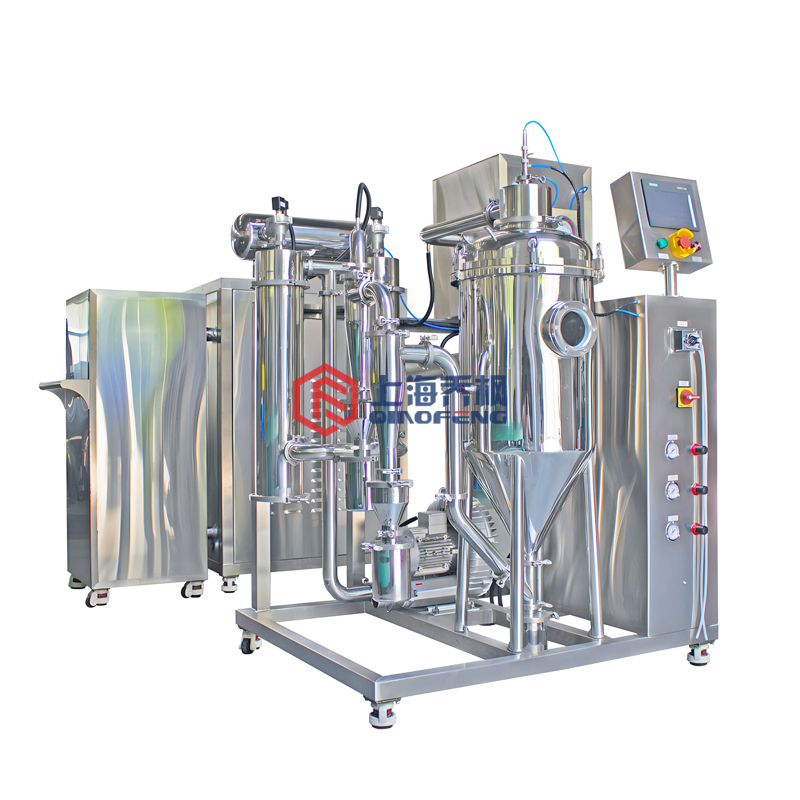
I. Main uses of laboratory-scale spray dryers
LaboratorySmall Spray DryerThe core principle is consistent with industrial spray drying: after the material is atomized, it contacts a hot medium inside the drying chamber, moisture evaporates rapidly, and the liquid material is directly converted into a finished powder. However, because it is intended for bench-scale R&D, the single-run feed volume is usually from tens of milliliters to several liters. Its main application scenarios fall into several categories.
- Formulation process bench testing to determine industrialization parameters This is the most core use. Before mass production, corporate R&D departments use small-scale machines for formulation trials, testing parameters such as feed concentration, inlet air temperature, feed rate, and atomization pressure, and observing changes in powder particle size, flowability, moisture content, and color. The process data obtained from bench testing can serve as a reference basis for subsequent pilot-scale and industrial-scale equipment scale-up production, reducing trial-and-error costs in mass production. Common materials: milk powder formulations, plant extracts, ceramic slurries, microcapsule embedding systems.
- Powder preparation of natural products and extracts Heat-sensitive materials such as Chinese herbal medicine extracts, fruit and vegetable juices, and probiotic fermentation broths can be prepared into powder samples by spray drying. Traditional drying methods easily cause sample caking and high-temperature degradation of active ingredients, while spray drying involves a short heating time and can better preserve the original characteristics of the material. Among these, for highly active materials such as probiotics and biological enzymes, low-temperature laboratory spray drying equipment is generally selected.
- R&D of new materials and inorganic powders For inorganic materials such as alumina, silica, various metal salt suspensions, and lithium battery-related precursor slurries, small-scale spray drying can be used to prepare spherical powders and improve powder dispersion. Powder morphology and bulk density are important test indicators in materials research, and small-scale machines can quickly prepare a small amount of sample for subsequent testing.
- University research and sample preparation University laboratories use it for research projects to prepare small amounts of powder samples for SEM scanning electron microscopy, particle size analyzers, elemental analysis, and other tests. The sample demand is not large, but the requirements for equipment flexibility are high, requiring frequent cleaning and material changes to avoid cross-contamination.
- Sample development for food and personal care products In the R&D of samples such as flavor microcapsules, collagen, and plant polysaccharides, powdered small samples are quickly prepared for solubility, sensory, and stability testing, shortening the new product development cycle.
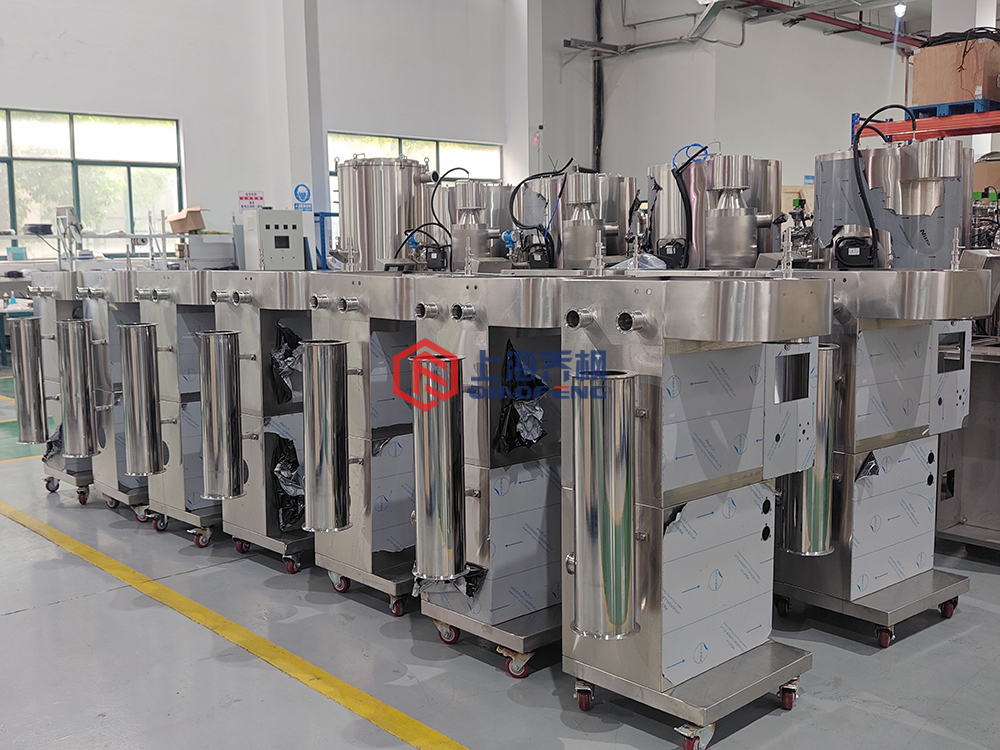
II. Core points for selecting a laboratory-scale spray dryer
When selecting a model, do not only look at equipment size. PrioritizeMaterial characteristicsas the first criterion, and then screen models based on sample volume, powder indicators, and safety requirements.
1. Material thermal stability: standard type vs. low-temperature closed-loop type
- Standard open-typelaboratory spray dryer: The inlet air temperature can generally reach above 200°C, and air is used as the drying medium. It is suitable for materials with relatively good heat resistance, such as ceramic slurries, some sugars, and inorganic salt solutions. The equipment has a simple structure, is easy to clean, and has a moderate price range, making it the choice for bench testing most conventional materials. Disadvantages: the high-temperature environment is not suitable for heat-sensitive materials, and it cannot be used when the solvent is an organic solvent.
- Low-temperature closed-loop spray dryer: It uses an inert gas (nitrogen) as the drying medium, the system is sealed, and the solvent can be recovered. The inlet air temperature is relatively low, making it suitable for heat-sensitive and easily oxidized materials such as probiotics, proteins, and biological enzymes; at the same time, it is compatible with organic solvent systems such as ethanol and acetone, and its explosion-proof properties meet the requirements of chemical and pharmaceutical R&D. This model has a complex structure and higher maintenance costs.
Selection reminder: To determine whether a material is heat-sensitive, focus on the decomposition temperature of the active ingredients in the material, and do not choose a high-temperature model based only on experience.
2. Sample throughput and atomization structure
The mainstream atomization method for laboratory models is two-fluid atomization, and a few models can be equipped with centrifugal atomization.
- Two-fluid atomization: Suitable for low-viscosity feed liquids, simple to operate, and compact in equipment size. Most conventional small-scale machines on the market use this method, and sample consumption is low. Disadvantages: high-viscosity slurries easily clog the nozzle and require frequent cleaning.
- Centrifugal atomization: The processing capacity is relatively larger, it can handle higher-viscosity materials, and it is less prone to nozzle clogging. However, the equipment cost is higher, and sample consumption is greater than that of two-fluid models.
Sample volume reference: For a single test with tens of milliliters of material, choose a small two-fluid machine; if a single test requires 1 L or more of feed liquid, give priority to a centrifugal atomization model.
3. Powder collection and anti-wall-adhesion design
Many extracts and sugar-based materials are highly sticky and easily adhere to the inner wall of the drying chamber after drying, resulting in very low sample recovery. When selecting a model, focus on the drying chamber material and collection structure: The common material for the drying chamber is high-borosilicate glass, which allows intuitive observation of the drying state and is easy to clean; the disadvantage is that it is brittle. Some models offer stainless steel drying chambers, which are impact-resistant and suitable for corrosive materials. If the material is highly prone to wall adhesion, give priority to a model equipped with ananti-wall-adhesion deviceto improve powder collection rate. The collection system generally includes a cyclone separator, and some models can be equipped with a bag filter to intercept fine powder and reduce sample loss.
4. Safety and supporting requirements
- Solvent system: If the material solvent is not water but an organic solvent such as ethanol,an open-type model must not be selected; a closed-loop system + nitrogen protection must be used to avoid combustion risks.
- Corrosive materials: For strongly acidic or strongly alkaline feed liquids, confirm that the chamber, piping, and nozzle materials are resistant to corrosion, and if necessary, use PTFE-lined accessories.
- Cleanliness requirements: For pharmaceutical and biological preparation R&D, pay attention to the materials of the parts in contact with the material, and give priority to 316L stainless steel accessories to meet cleaning validation requirements.
5. Auxiliary functions
Optional features can be selected as needed: real-time online temperature display, adjustable feed rate via peristaltic pump, and automatic cleaning components. Such functions can lower the operating threshold and reduce human operating errors, making them suitable for novice operators or laboratories that need a large number of repeated tests.
III. Summary of pitfalls to avoid in model selection
- Do not only look at the equipment's appearance and size. First confirm the material's heat sensitivity and solvent type, as these two points determine the major category of the model;
- The core goal of bench testing is to obtain reliable process parameters, so the equipment's parameter adjustment range must cover your experimental plan;
- Evaluate the material's wall-adhesion characteristics in advance; otherwise, low powder recovery after testing may occur, and valid samples may not be obtained;
- Equipment cleaning convenience is critical, because laboratories frequently change different materials and must avoid cross-contamination;
- If conditions permit, prioritize arranging material sample testing to verify equipment suitability through actual drying results before confirming the purchase.
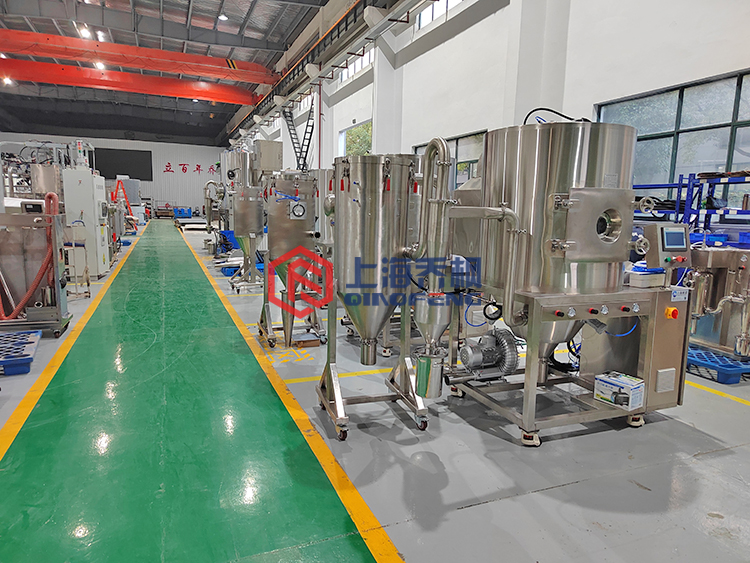
Laboratory-scale spray dryeris a powerful tool for powder development on the R&D side. Its value does not lie in mass production, but in quickly completing bench-scale process exploration. Proper model selection can stably prepare the target powder and obtain referenceable process data; poor model selection can lead to sample scrapping and prolonged experimental cycles. Before purchasing, clearly sort out material properties, experimental goals, and safety boundaries, and combine them with material trial drying results to select a model that fits your laboratory's needs.
Frequently Asked Questions
1. In what scenarios are laboratory-scale spray dryers mainly used?
Mainly used in laboratory scenarios such as new material R&D, food formulation development, pharmaceutical intermediates, and natural product extraction. It can dry solutions, suspensions, and emulsions to obtain dry powder in one step, and is especially suitable for formulation process pilot testing, determining industrialization parameters, and powdering natural products and extracts.
2. Compared with industrial large-scale spray dryers, what advantages do laboratory-scale units offer?
Small footprint and low sample consumption; a single injection is typically from tens of milliliters to several liters, with a wide adjustable parameter range. It is suitable for small-scale trials in research laboratories and corporate R&D centers, reducing material waste and trial-and-error costs.
3. When selecting a laboratory-scale spray dryer, which parameters require particular attention?
Attention should be paid to the feed concentration adaptation range, inlet air temperature adjustment range, feed rate control accuracy, atomization pressure or atomization method, drying tower material, minimum and maximum sample processing capacity, powder collection rate, and whether it supports heat-sensitive materials or organic solvent processing.
4. Can process data obtained from pilot-scale trials be directly applied to industrial scale-up?
Lab-scale data serves as an important reference basis for scale-up production, but it usually cannot be directly applied as is. Corrections and verification are required in combination with pilot-scale equipment for parameters such as feed concentration, inlet air temperature, feed rate, and atomization pressure, so as to reduce the cost of trial and error in mass production.
5. What material forms are suitable for processing with a laboratory-scale spray dryer?
Suitable for processing liquid materials such as solutions, suspensions, and emulsions, commonly including milk powder formulations, plant extracts, ceramic slurries, microencapsulation systems, etc., which can be directly converted into dry powder.
6. What is the minimum sample quantity required per run? Is it suitable for precious samples?
The single injection volume of laboratory-scale machines typically ranges from several tens of milliliters to several liters. Compared with industrial equipment, the sample consumption is lower, making them more suitable for the pretreatment of precious or limited samples. However, the specific minimum processing volume needs to be confirmed according to the machine model.
7. What are the common reasons that a purchased unit fails to match material characteristics?
A common cause is that material characteristics are not fully considered during equipment selection, such as viscosity, solid content, heat sensitivity, whether organic solvents are present, and target powder particle size requirements, resulting in a mismatch in atomization method, drying temperature, or material of construction. It is recommended to first clarify the material properties and experimental objectives before selecting the equipment.