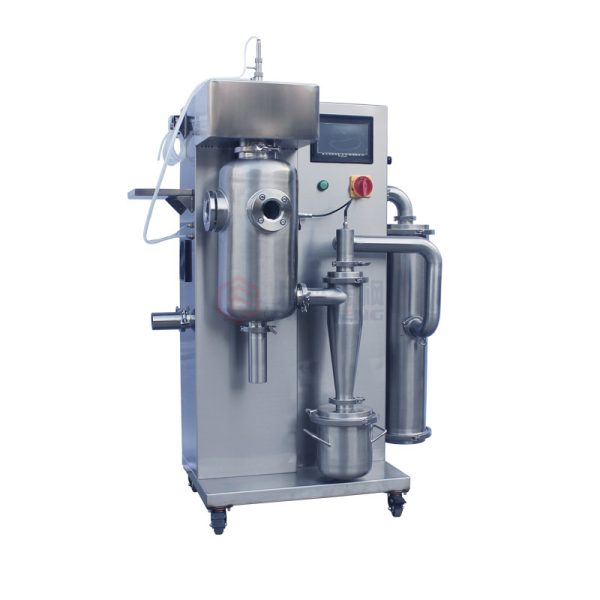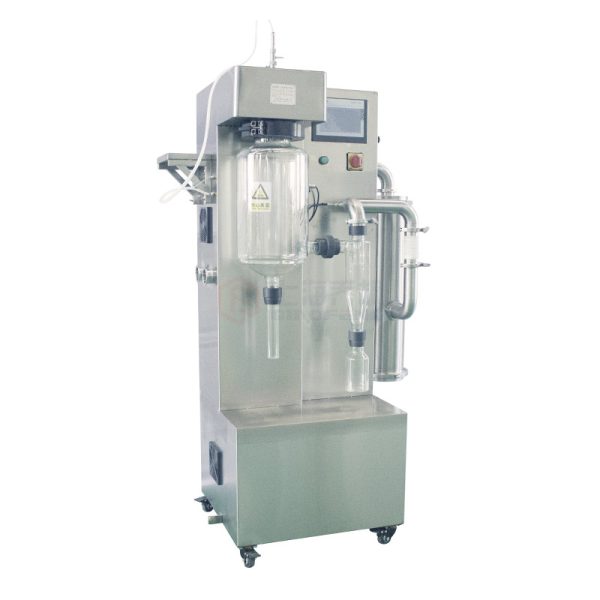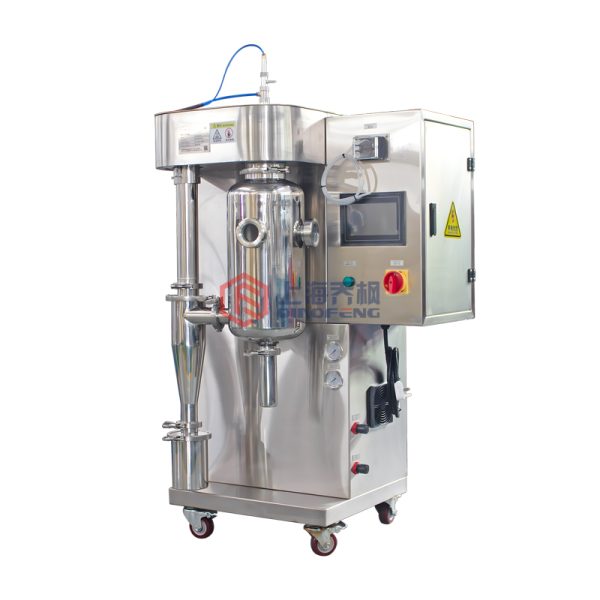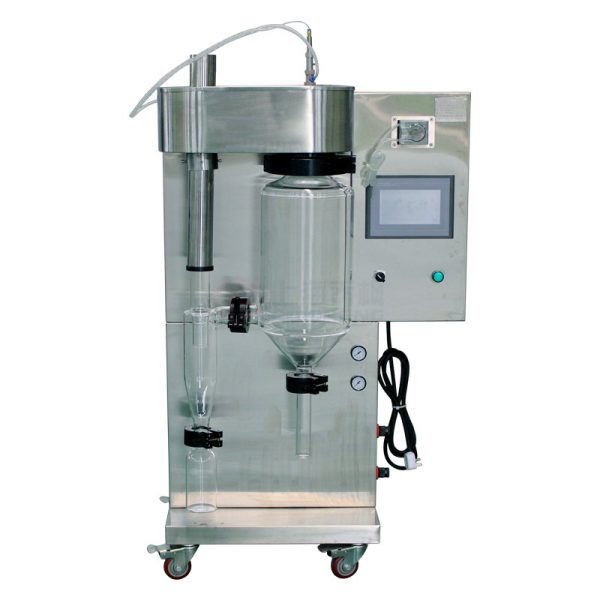
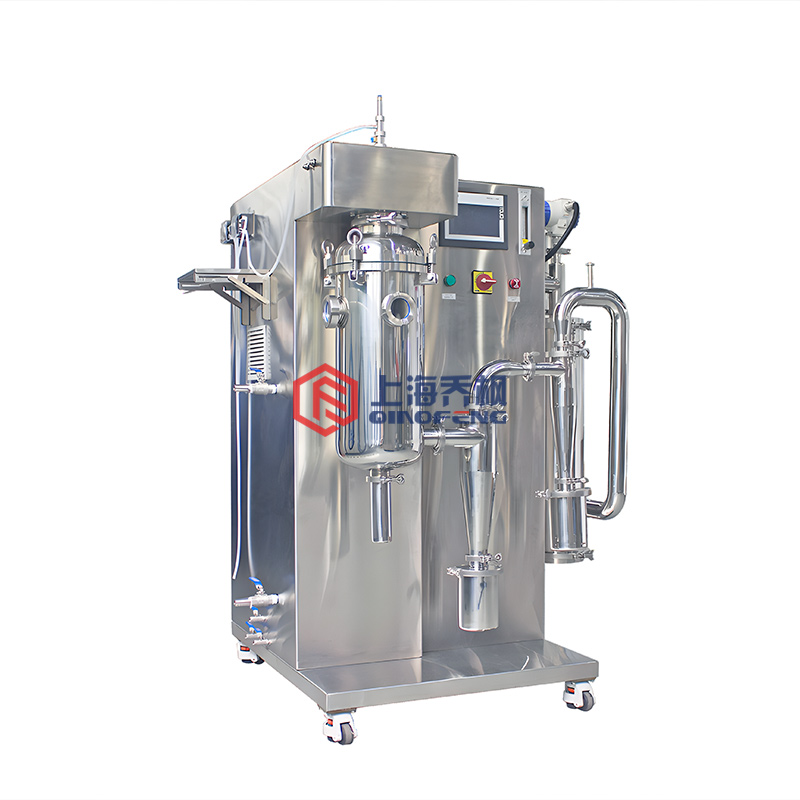
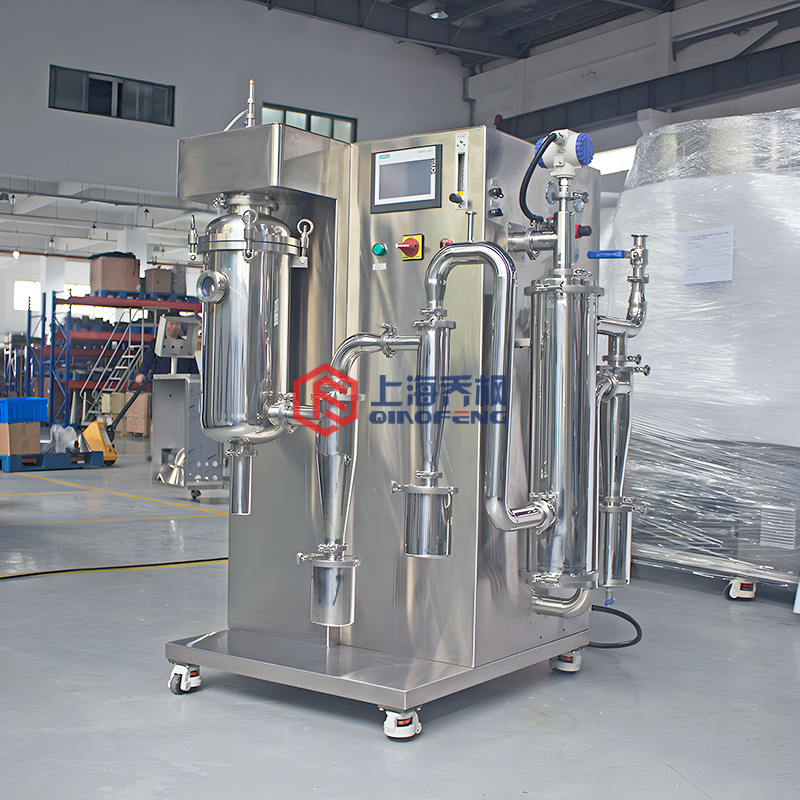
1. Equipment Introduction:
This device is specifically designed for organic solvents, replacing the usual air medium with an inert gas medium formed by circulating nitrogen for spray drying. In addition to recovering the product, it can also recover organic solvents. This closed-loop spray system is specially designed for the characteristics of organic solvents, such as low flash points, slight toxicity, and flammability and explosiveness.
1.1 Explosion-Proof System:
First layer: Nitrogen explosion-proof. Based on the inert nature of nitrogen gas, the entire pipeline uses nitrogen circulation, and the system can only operate normally when the oxygen content is below 3%.
Second layer: Industrial control explosion-proof. When the pressure exceeds 3000 Pa, the safety valve opens to release pressure. Please consult the factory's technical engineer for detailed industrial control procedures.
Third layer: Explosion-proof disc. When the pressure inside the drying tower system rises abnormally, the explosion-proof disc on the top of the tower automatically opens to relieve the explosion.
Fourth layer: Whole machine explosion-proof. It includes an internal ventilation system (optional), suitable for hazardous gases.
1.2 Product Features:
Prevents oxidation and avoids danger;
Easily achieves aseptic and dust-free conditions.
Recovers solvents from the feed liquid.
Improves the preservation of aromatic components.
Capable of drying or cooling granulation of flammable feed liquids.
Capable of drying feed liquids with very high thermal sensitivity.
Achieves low pollution or zero pollution.
Eliminates the need for deodorization equipment.
Capable of low-temperature drying below 100°C.
1.3 Applicable Products:
Non-oxide ceramics, superhard alloys, high-performance battery materials. Seasonings, health foods. Pharmaceuticals, vitamins, organic drugs. Synthetic resins, waxes, etc.
2. Overall Structure (Subject to Qiaofeng Design)
The equipment mainly consists of: a feeding system, a heating system, an atomization system, a spray drying system, an inert gas circulation system, a product recovery system, and a condensation system.
2.1 Feeding System
Includes: mixing tank, solvent tank, feed peristaltic pump, feed pipeline, atomizer. First, the prepared slurry is placed into the mixing tank. After uniform stirring, driven by the peristaltic pump, the slurry passes through the pipeline valve to the atomizer. The atomizer needs to be equipped with a special explosion-proof atomizer nozzle from Shanghai Qiaofeng, with a nozzle lifespan warranty of one year.
2.2.2 Heating System
The heating system consists of a nitrogen-electric heating system. The enclosed heating elements directly heat the drying medium (nitrogen) within the pipeline and control the temperature accuracy within ±2°C through a set of voltage regulation control devices.
2.32.3 Drying Tower
The drying tower includes components such as the tower body, explosion-proof lighting, gas distributor, temperature control equipment, pressure relief device, air inlet pipeline, air outlet pipeline, and oxygen content measurement sensor. A filtration device needs to be installed inside the air inlet pipeline. Under the heating effect of the hot air, the atomized slurry volatilizes and dries into powder, falling to the discharge port at the bottom. The gas is discharged from the exhaust pipe for closed-loop circulation.
2.2.4 Product Recovery System
The gas discharged from the bottom of the drying tower contains powder and organic solvent vapor. A filtration device is used for recovery, separating the powder from the organic solvent gas. The powder is recovered, and the organic gas enters the condenser for recovery and reuse.
2.2.5 Gas Circulation System
Gas circulation is completed by a set of circulation fans. The drying medium is output from the circulation fan, flows through the condensation device, electric heater, drying tower, cyclone separator or bag filter, and high-temperature resistant high-efficiency filter, and then returns to the circulation fan for reuse, forming a gas circulation system.
2.2.6 Condensation System
The condensation system consists of a refrigeration unit, condenser, refrigerant circulation pump, filter, heat exchanger, and connecting pipelines. The “wet” gas (containing evaporated organic solvent vapor) discharged from the dust collector enters the condenser. After being cooled and de-liquidated in the condenser, the gas returns to the gas circulation system. The organic solvent vapor is condensed and recovered, then automatically discharged into the solvent tank through the liquid level controller at the bottom of the condenser.
2.2.7 Atomization System
This system uses a mechanical structure with hard contact, no sealing gaskets, and no leakage. Unlike ordinary electric centrifugal nozzles, overheated corrosive steam in a positive pressure environment can come into long-term contact with the wires of the electric nozzle, corroding them and causing the plastic coating on the wire surface to corrode, soften, and fall off, leading to a short circuit.
3. Advantages of This Equipment:
3.1 Utilizes Qiaofeng's innovative (QFN-BLG-ES-VER2018-1A) atomization system. This system uses a mechanical structure with hard contact, no sealing gaskets, and no leakage. Unlike ordinary electric centrifugal nozzles, overheated corrosive steam in a positive pressure environment can come into long-term contact with the wires of the electric nozzle, corroding them and causing the plastic coating on the wire surface to corrode, soften, and fall off, leading to a short circuit.
3.2 Capable of producing ultra-fine powders in the 1-8 micron range, suitable for battery material preparation.
Note 1: Ethanol evaporation capacity is based on an inlet air temperature of 140°C. Note 2: For equipment requiring larger evaporation capacity, please inquire online or contact our company.